I woke up early this morning with these words from Keith Green’s 1980 song “Love The Lord”. The phrase comes from the Apostle Paul’s letter to the Ephesians (chapter 2, verse 10). Paul, and this book in particular, are very fascinating.
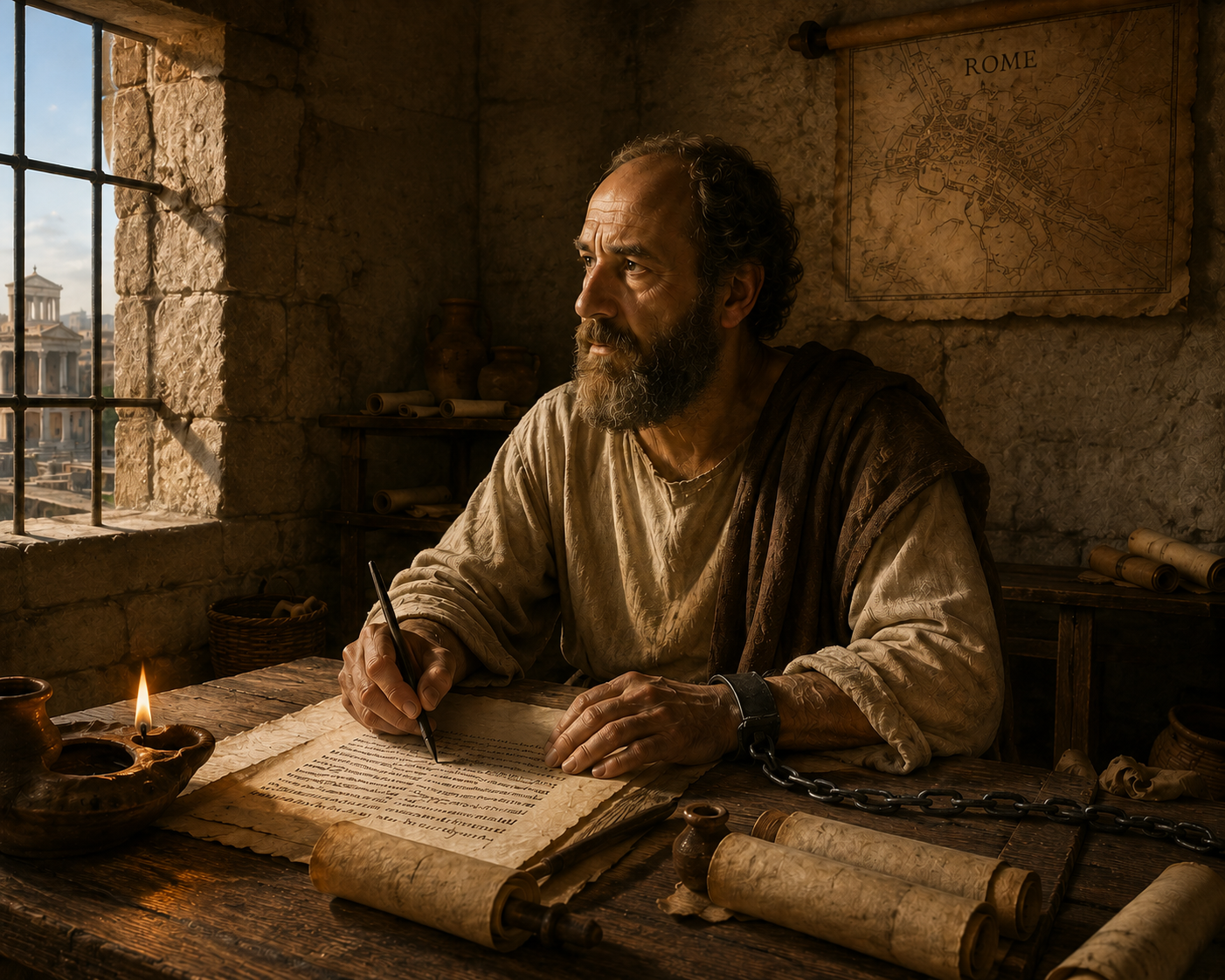
The book itself was written in AD 60 while Paul was imprisoned in Rome.
The chapter that I wish to write about today though, is chapter 3. Verse one starts off with Paul stating “I, Paul, the prisoner of Christ Jesus for you Gentiles”. I’ve often thought of this verse, and it came up in a Bible study with friends last week.
It might mess with a lot of modern Christians’ theology to think too deeply about it, but maybe sometimes we find ourselves in a situation that’s far from ideal. And discover that the whole time God was actually in charge of it.
Back in 1986 I was living in Dubbo in NSW, Australia.
I was single, and I was lonely, even though I had close friends around me. I didn’t so much pray about the situation as whinge and whine – quite often in fact.
I remember one day walking a couple of kilometers to the supermarket and back, and getting enough food for a couple of days when I really needed enough to last for over a week when I was due to get paid.
I prayed (complained) all the way home, only to find a couple of bags of food that someone had left at my door.
At the time I had no idea who had left them there, and I didn’t know whether to laugh or to cry, but I was very repentant, and very thankful.
God had blessed me despite my attitude, and I began learning a very deep lesson on God’s love and purpose for my life.
A few weeks later I met the girl who became my wife.
Now my experience in no way compares with that of the great apostle, but it’s just an example of how we react when things seem to go awry, and then find that the Lord has everything under control from start to finish.
Paul was a prisoner of the Romans, but described himself as “the prisoner of the Lord” for the benefit of those reading his letter, including you and I today, over 2,000 years later.
But he wasn’t dwelling on his circumstances.
Like the apostle John on the isle of Patmos, where he was exiled for preaching the gospel, who described himself in the book of Revelation as “being in the Spirit”, Paul wasn’t complaining about his situation.
He was using it to teach others.
He goes on to talk about how we have boldness and access with confidence through faith in Jesus.
Then he goes further to talk about the incredible riches of God’s grace and mercy, and how he was praying for those reading his letter (including us), that we’d all come to a knowledge of God’s grace and mercy, and that we’d be strengthened on the inner man.
That doesn’t sound like someone feeling sorry for himself.
Paul comes across as someone who knew who he was in Christ, that despite his present circumstances, God was in control of the whole situation.
The title of this post is “we are His workmanship, created for good works in Christ”. Keith Green highlights Romans 12:1 “to offer your bodies as a living sacrifice“
Today, in 2026 and beyond, God has the same call on our lives, wherever we are, and whatever we are doing, to make that same sacrifice. Rather than moan and complain (as I’ve done in the past), Let’s ask God what He’s doing in the situation, to help us forgive those who have hurt us, and to make us more Christlike as He does it.
The Christian life isn’t a list of dos and don’ts, it’s not a series of commandments that we have to keep in order to get right with God. He accepts us from the start, and the “good works” that we do flow out of His love and presence in our lives.
The hope of eternal life, and living in His presence is real, and is part of the gospel. but so is walking in His purpose for your life. May God truly bless and and strengthen you as you continue in your walk today.
Read next: I wrote another article about Paul and how he got to Rome and wrote the book of Ephesians, among others, while imprisoned there. You can read about how he survived shipwreck along the way here.